Education in the USA
For quality, freedom of choice and global recognition, an American education remains the gold standard. Millions of students worldwide, including young people from Central Asia, vote with their dollars and their time for the USA. In the 2024/2025 academic year, nearly 1.2 million international students were enrolled at American universities — 6% of the total student population. They contributed 55 billion dollars to the economy and supported more than 355 thousand jobs. The system is wonderfully flexible, but it rewards a methodical approach to finances and preparation. Let’s calmly work through how it all fits together.
Pros and cons: an honest conversation
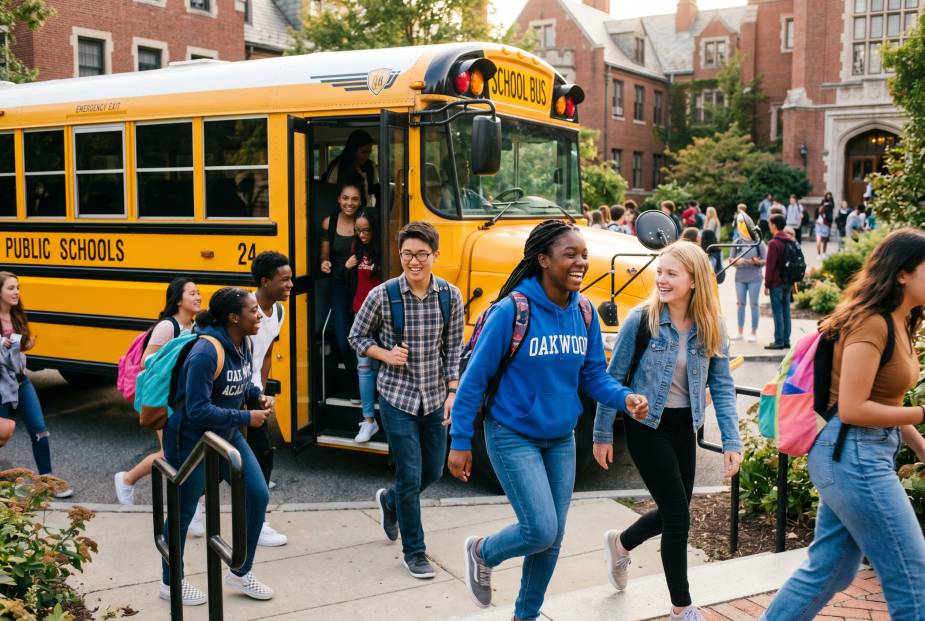
Let’s begin with the good, so you can see what all that money buys. The USA has no single national education standard — each university runs its own programme. That gives you freedom: in the first two years of a Bachelor’s degree you sample subjects from a range of fields and choose your specialisation later, once you truly understand what interests you. Campuses are cities in miniature, with their own infrastructure, hundreds of clubs, sports teams and volunteer projects. You learn not only in lecture halls but through constant contact with people from all over the world. A degree from an American university is recognised in 190 countries, and 40% of Nobel laureates are American-university graduates. Many programmes are built in close partnership with giants such as Google and Microsoft, opening the door to real internships before you even graduate.
Now the drawbacks, which are best known in advance. The chief one is cost. An international student spends, on average, between 60 and 90 thousand dollars a year on tuition and living. At top private universities such as Columbia or USC, tuition alone can reach 55–65 thousand a year, with accommodation and meals adding a further 12–18 thousand — plus insurance and personal expenses. Then there is the culture shock. Even with good English, the first months are hard: a different grading system, a different way of dealing with professors, a different rhythm of life. You need to be ready for it.
Which programmes are in demand
The choice of study options in the USA for international students is broad — from children’s camps to doctoral programmes. The gentlest entry point is a summer language camp of 2–4 weeks for schoolchildren aged 7 to 18. These run on the campuses of well-known universities such as UCLA in Los Angeles and Fordham University in New York, with prices from 7 thousand dollars for a couple of weeks. A little more serious are language schools and semester programmes for students aged 16 and over: intensive English courses lasting from 2 to 24 weeks — a good option if you are not yet confident about applying straight to a university.
Secondary education for international students is a less common but accessible route. Public schools take you for up to 12 months, and private schools for a full course, provided the school is SEVP-accredited. Admission requires an essay, proof of finances and TOEFL.
The main flow is Bachelor’s and Master’s programmes. The universities most welcoming to international students are NYU (17 thousand international students), Northeastern University (almost 16 thousand), Columbia University (15 thousand) and the University of Southern California (almost 15 thousand). Acceptance rates vary widely, from 3.7% at Columbia to 20.5% at Northeastern. Scholarships for international students do exist, but full coverage is granted to only 1–2% of applicants — the true stars of academia or sport. Partial scholarships are far more common: Colorado State University, for example, offers from 2 to 12 thousand dollars a year, and West Virginia University 11–17 thousand.
At the summit sits the MBA. A two-year programme at a leading business school costs, on average, 80–150 thousand dollars. At the University of Michigan, tuition for non-residents is 81 thousand a year, while total expenses including accommodation and books reach almost 112 thousand. At top private schools such as Columbia Business School it is close to 92 thousand a year, before accommodation.
Student life: what awaits you on the ground
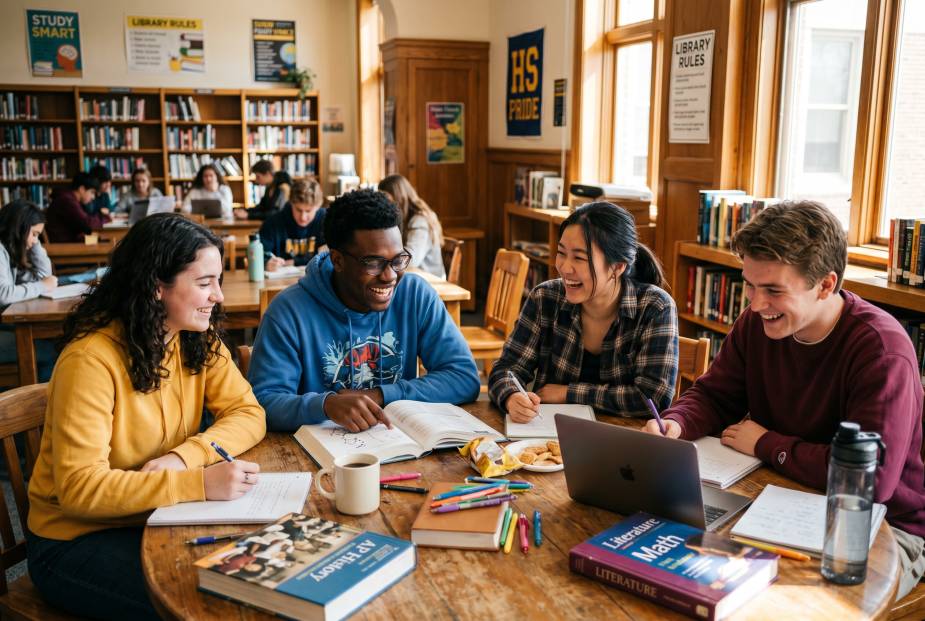
The moment you arrive, the first to help is the International Student and Scholar Office (ISSO). It handles everything, from issuing your student ID to confirming the legality of your status and finding housing. The first week is orientation, where you learn the university’s traditions and find your community. At the same time, the system demands real self-discipline: professors will not chase you with reminders, and your performance is yours alone to manage. Where in Kyrgyzstan a student might once have been «carried», in the USA that simply does not happen.
Most international students live in dormitories on campus — it is cheaper and better for making friends. By the end of their studies, many move into rented apartments. Transport in big cities such as New York is convenient but pricey, while in the university towns of the Midwest it is hard to manage without a car. Medical insurance is compulsory for the F-1 visa, averaging 1,000–1,800 dollars a year. And always carry your passport and I-20 — checks are not uncommon.
Unique features
Liberal Arts is an American hallmark. Study engineering and you will still take history and literature; study history and you will pick up the basics of statistics. The aim is to shape not a narrow technician but a broadly minded person. Professors act as mentors: unlike in much of Europe, a professor will know you by sight, and you can drop by for a chat about your studies or career. A word, too, about the spirit of student unity: clubs, sports teams, fraternities and sororities are all part of the fabric. You will be drawn into campus life, and it genuinely pays off in the career connections it builds.
What matters for citizens of Kyrgyzstan
For young people from Kyrgyzstan, a few points stand out. The EducationUSA advising centre in Bishkek is your main ally, offering free guidance on admissions, tests and funding. One of the most valuable opportunities is the Fulbright programme for Master’s study. It covers tuition in full and provides a monthly stipend, medical insurance and a materials allowance. The US Embassy in Kyrgyzstan opened applications for the 2027–2028 academic year with a deadline of 10 June 2026 (now passed, but worth keeping in mind). Requirements: higher education equivalent to an American Bachelor’s degree, residence in Kyrgyzstan and good English.
For schoolchildren there is FLEX, a one-year exchange programme with an American host family and school. Funded entirely by the US State Department, it covers travel, accommodation, insurance and pocket money. The catch: you must return home at the end of the year and cannot apply for an American immigration visa for two years afterwards.
The Ministry of Foreign Affairs of Kyrgyzstan advises preparing a full set of documents well in advance, especially financial proof and academic certificates. And never hesitate to ask for help.
The key points in brief
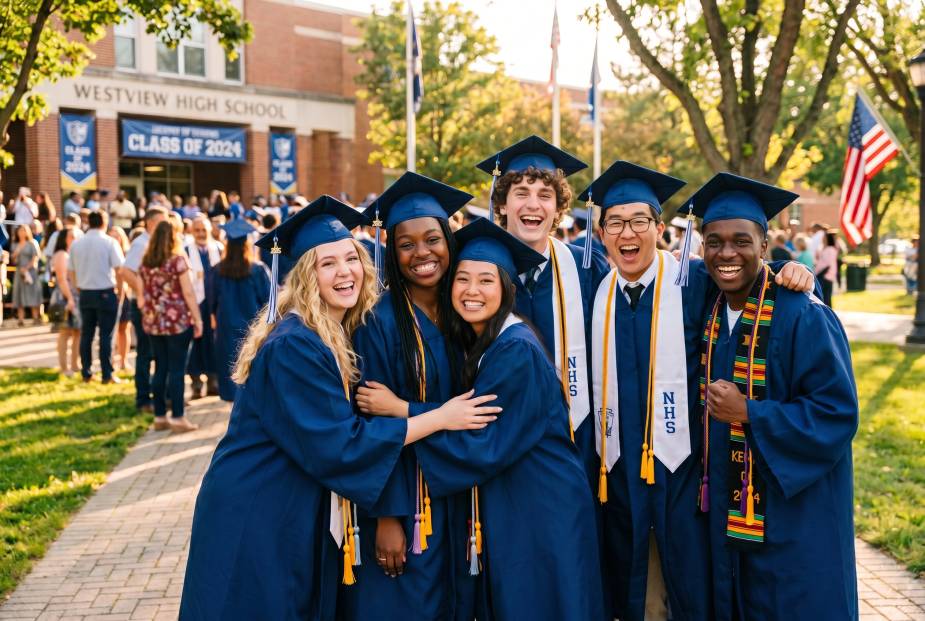
Education in the USA is a powerful start, but it calls for serious financial and emotional preparation. Yes, it is expensive and competitive. But the freedom to choose your courses, the links to global corporations and the chance to stay and work through OPT and the STEM extension for 2–3 years after graduation make it one of the most promising paths there is. For citizens of Kyrgyzstan, targeted grants and scholarships can cover, if not everything, then a substantial part of the cost. With a sound strategy — through EducationUSA, Fulbright or FLEX — admission to an American university becomes not a distant dream but a workable plan.
If questions remain about choosing a programme, preparing documents or finding funding, get in touch with our specialists. We will help you find the right route and make applying to study in the USA as transparent and predictable as possible.