Education in China
China is a country of contrasts and a meteoric rise. Just ten years ago, studying there seemed exotic; today Peking University and Tsinghua University sit firmly in the world's top 20 and compete calmly with the British and American giants. Prices are noticeably lower than in Europe, and scholarships that cover everything — from tuition to plane tickets — are no myth but a real option. Why pay 50 thousand dollars a year for an American university when you can study for free in Shanghai and receive a scholarship on top? The catch, of course, is that many are put off by the characters and the rumours of harsh discipline. Let's work out where the truth ends and the fiction begins.
The good and the not-so-good
The main plus is the value for money. An international student spends around 3–8.5 thousand dollars a year on living and study, and with a good scholarship you can bring that down to 2–3 thousand. Next to Europe or America, that's small change.
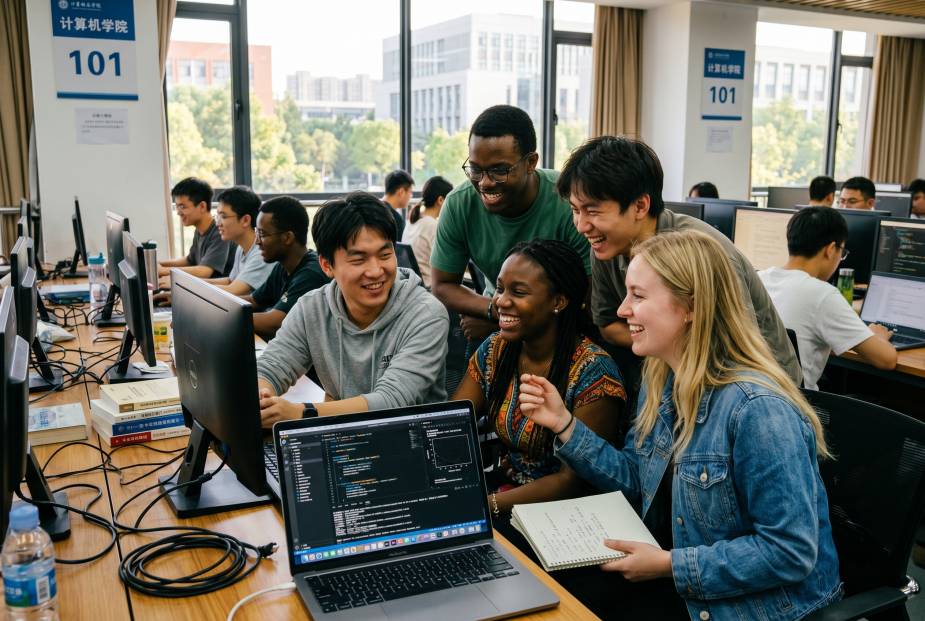
Safety and discipline are another strong point. Chinese campuses resemble self-contained towns, with shops, gyms and police stations. There's no studying just for show here: the system is built around honest exams and strict attendance. At the same time, international students are spared the national «Gaokao» exam, which local schoolchildren face with dread.
The downsides, frankly, are real. The language barrier comes first. Even if you've been admitted to an English-language programme, you'll feel deaf and mute in daily life without Chinese. Local people, especially in the provinces, don't speak English, and the familiar Google Maps and social networks don't work in China. You'll have to master local apps — a quest in itself.
Chinese bureaucracy deserves a novel of its own. Securing a student residence permit is an adventure with an uncertain outcome that can eat up several weeks of your life. And do be ready for strict hall-of-residence rules: curfews and inspections are routine. For anyone used to their freedom, that can come as an unpleasant shock.
The programmes on offer
For the youngest students and complete beginners — summer and winter camps at universities. This is a gentle introduction: you can test whether China is «your» place without committing to a long stay. The same universities run one-year preparatory language courses, after which admission to a Bachelor's becomes far easier.
Secondary education is a niche choice for those who want a Chinese school certificate and to apply to a local university on the same footing as everyone else. The option mainly appeals to families planning to settle in China for good.
Bachelor's and Master's degrees are the core offering. A Bachelor's lasts 4–5 years. You can study in Chinese (which requires an HSK certificate) or in English — Chinese universities are actively launching English-language programmes to attract international students.
Prices depend heavily on prestige. Humanities subjects cost around 900–1100 dollars a year. Technical subjects come in at around 2800. The top-tier Tsinghua University charges 3600–5500 dollars a year for an international Bachelor's, and a little more for a Master's. That said, the total annual cost including accommodation and fees can stretch to 28.5 thousand if you're unlucky with scholarships.
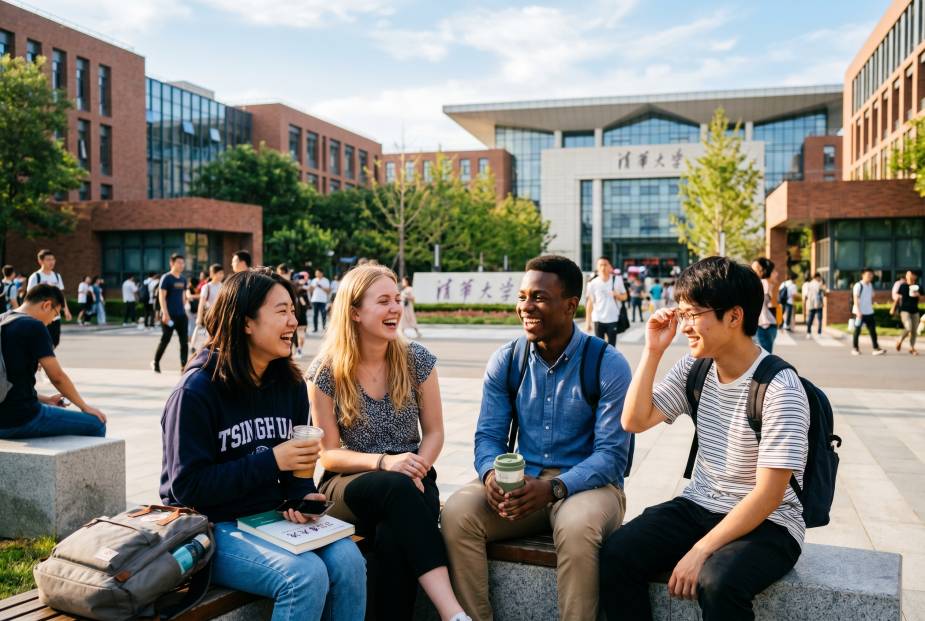
The «C9 League» is China's «Ivy League» — nine elite universities. Among them are the technological Tsinghua (17th in the world in QS 2026), the humanities-focused Peking University (14th), Fudan in Shanghai, Shanghai Jiao Tong University and Zhejiang University. Five Chinese universities rank among Asia's top 10 in QS 2026, and the PRC has more than three thousand in total, of which about five hundred admit international students.

What life is like for a student
Arriving in China begins with a quest. First passport control (don't join the queue for PRC citizens!), then the arrival card, then a taxi to the campus. Until you've picked up the language, a trip by metro or taxi can turn into a merry adventure with an uncertain ending.
A hall of residence is the safest option for a newcomer. You live on the university's grounds, eat in the canteen and use the library. Renting a flat in China is cheaper than in Europe — a year's rent for a one-room flat can be had for 20 thousand yuan — but it's more complicated legally, and you have to register with the police yourself.
In the early days, coordinators and tutors will help you — they work specifically with international students to help them settle in faster. There are many Russian-speaking students in China, but don't confine yourself to that circle. Chinese people are very open and genuinely glad to help anyone who tries to speak their language. Even two or three words count as a win.
Unique features
The crown jewel is the CSC scholarship system (Chinese Government Scholarship). Each year China awards around 30 thousand scholarships to international students from more than 180 countries. It covers 100% of tuition, free accommodation, medical insurance and a monthly stipend: 2500 yuan for Bachelor's students (around 345 dollars), 3000 yuan for Master's students (around 415 dollars) and 3500 yuan for PhD students (around 480 dollars). This is no loan — it's a real chance to study for free if you do well in the exams.
STEM and IT are another forte. China is Apple, Huawei and Tencent rolled into one. Technical education here costs more than the humanities, but the returns are incomparable. Engineers and programmers from Chinese universities go on to the world's best corporations.
HSK is the state exam in Chinese. Its results are needed both for admission and for work. An HSK certificate is a huge advantage on the job market, especially if you plan to stay in Asia.
What is important for citizens of Kyrgyzstan
The Chinese government sets aside quotas for our citizens each year. For the 2026/2027 academic year, for instance, 15 government scholarships were opened under separate agreements, while Jinan University allocated 20 places specifically for Kyrgyzstan. The package covers tuition, accommodation, a monthly allowance and medical insurance. Candidates registered in the online system student.edu.gov.kg and uploaded their documents by the end of January 2026. And by mid-year, news emerged of further scholarships — another 20 places in Jinan province for study at Jinan University and Shandong Jianzhu University, with deadlines extended to 10 June and 1 July.
Besides the quotas from our government, you can apply directly to Chinese universities for the CSC scholarship (at Tsinghua or Shandong Polytechnic University, for example), or enter the competition run by the PRC embassy in Kyrgyzstan. The language requirements are standard: HSK for Chinese-language programmes or TOEFL/IELTS for English-language ones. The hardest stage for international students turns out to be not the exam but getting through the bureaucratic procedures at the immigration service. But those are mere details.
The key points in brief
China is a country where, for comparatively little money (and sometimes for free), you can earn a world-class degree, live in ultra-modern megacities and speak a language that in ten years' time will be every bit as essential as English. Yes, the characters and the strict hall-of-residence rules await you. But Chinese universities offer a rare combination of affordable price and quality, and the CSC scholarships make studying here entirely realistic even on a modest budget.
If you'd like to work out which Chinese university and subject are right for you, how to apply for the CSC scholarship correctly and which documents you need for the X1 visa — get in touch with our specialists. We'll help you shape a strategy and make the path to a Chinese degree as transparent as possible.