Education in South Korea
South Korea achieved an economic miracle in half a century, and it made education the engine. Here, strong academic results are a matter of national pride, and a degree from a good university opens the doors to Samsung, Hyundai and LG — even for a foreigner.
For us, the people of Kyrgyzstan, Korea is a compelling option. It isn't too far geographically, it feels closer than Europe, and the scholarships sometimes cover everything — from the plane ticket to pocket money. True, a strict hierarchy and a language barrier await you, one you won't break down in a month. But first things first.
The good, and the not-so-good
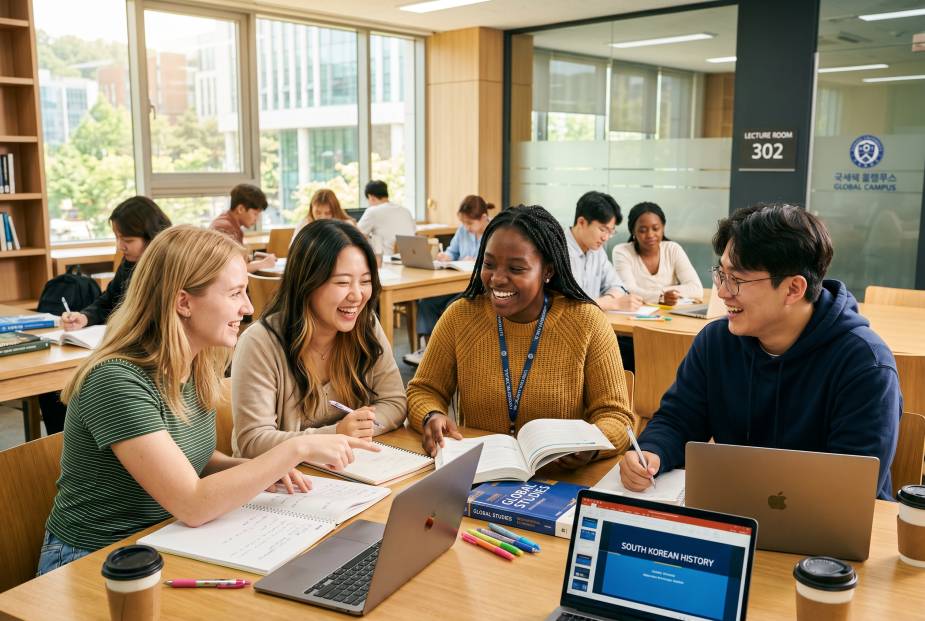
Let's start with the upsides. The main one is an above-average standard of education at a reasonable price. State universities charge from 3 to 6 thousand dollars a year, private ones from 6 to 9 thousand. Against the USA and Europe, that's very fair.
The quality is borne out by the rankings. In QS 2026, three Korean universities sit in the world's top 100: Seoul National University (38th), Yonsei University (50th) and Korea University (61st). And 42 Korean universities made the ranking in all. No joke.
Scholarships are a strong point of their own. The Global Korea Scholarship (GKS) government programme covers tuition, accommodation, plane tickets and insurance. With proper preparation, getting into Korea for free is entirely realistic.
Safety in Korea is no myth. You can walk at night, leave your belongings unattended, and a lost wallet will, nine times out of ten, find its way back to you.
Now for the downsides, and they are serious. The chief one is the hierarchy. In Korea, age and status decide everything. A junior never contradicts a senior, nor a student a teacher. Koreans tend to be reserved and slow to make the first move. You may feel like an outsider until you've proved your reliability. It takes time to get up to speed.
Then the language barrier. Although the big cities have plenty of English-language signs, you'll feel helpless in daily life without Korean. And the climate — a humid summer of downpours and a dry, windy winter. For someone from Kyrgyzstan, that may come as a surprise.
The programmes on offer
Summer camps and language schools are the gentlest introduction. Universities run summer and winter programmes that immerse you in the language and culture, and one-year language courses make good preparation before applying to a Korean university.
Secondary education at private schools suits those who want a Korean school certificate. A year at a private boarding school costs from 15 to 30 thousand dollars. Expensive, but it opens the road to local universities.
Bachelor's and Master's degrees are the core offering. A Bachelor's lasts 4 years, a Master's 2. Many universities offer English-language programmes through Graduate Schools of International Studies (GSIS). The most popular fields among international students are IT, business and international relations, engineering (especially automotive and robotics), biotechnology and Korean studies. Ajou University GSIS, for example, gives a 50% tuition discount to all new students, and up to 90 percent receive scholarships each semester.
KAIST (the Korea Advanced Institute of Science and Technology) is Korea's MIT. It ranks among the world's top 100, offers fully funded scholarships to international students and teaches in English.
Scholarships: a real chance, not a fairy tale
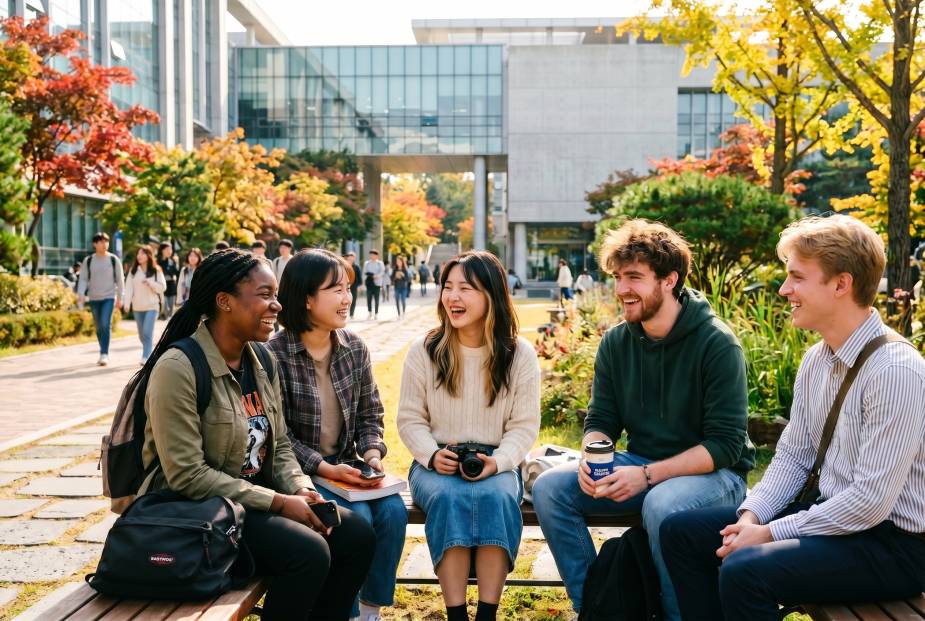
The Global Korea Scholarship (GKS) is the main opportunity for our citizens. This government scholarship from South Korea's Ministry of Education covers tuition at one of 65 participating universities, a monthly stipend (800–900 thousand won for living costs), return plane tickets, medical insurance and even a one-year Korean language course for those without TOPIK.
Requirements: under 25 for a Bachelor's, under 40 for a Master's and PhD, a grade average of at least 80% (or a GPA of no less than 2.64/4.0 for a Bachelor's and 2.8/4.0 for a Master's). Kyrgyzstan is on the list of participating countries.
The application process in 2026 worked like this for us: selection through the Korean Education Centre in Bishkek. The exact quota for Kyrgyzstan isn't published, but places are available. Applications for Master's and doctoral study ran from 12 to 25 February 2026 on the studyinkorea.go.kr website. For Bachelor's study, traditionally in autumn, from 15 September to 31 October.
The KOICA Scholarship is another option, for Master's study — full coverage plus a stipend. It is aimed at civil servants and professionals who will return to develop Kyrgyzstan after their studies.
Student life: settling in and everyday living
Korean halls of residence mean comfort: a laundry, a 24-hour shop, a gym, rooms to relax and study in, and sometimes paid canteens. Registration opens 2–3 months before the semester — keep an eye on your email and choose a room for 1, 2, 3 or 4 people. On-campus halls often go to new students to help them settle in. Some universities may ask you to move into rented accommodation after a year or two, but this isn't a universal rule — many provide housing for the entire course.
Korean cuisine is a chapter of its own. Kimchi, samgyeopsal (grilled pork), tteokbokki (spicy rice cakes) and bibimbap will become your daily companions. Be ready for almost everything to be spicy. Stock up on water.
Transport is convenient and cheap. A single trip on a travel card is around 1500 won, with a free transfer within 30 minutes.
Unique features
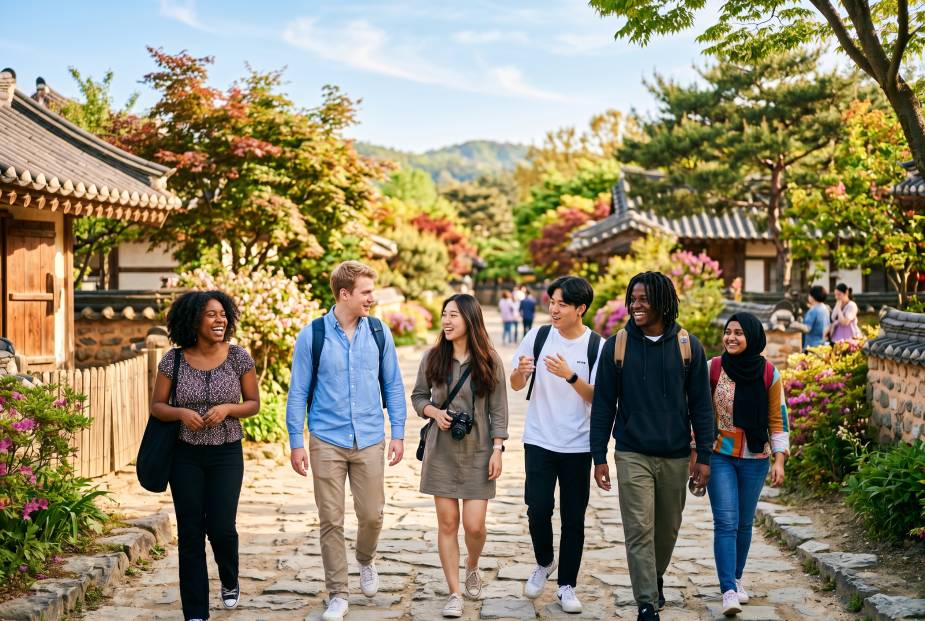
The Korean Wave (Hallyu) — student festivals and concerts by K-pop stars are held regularly right on the campuses. If you're a fan of BTS or BLACKPINK, you'll find yourself at the epicentre of it all.
TOPIK is the state exam in Korean. The certificate is needed for admission, for work and for some scholarships. Holders of levels 5–6 can count on monthly supplements, and GKS students who pass TOPIK at a high level receive an additional 300 thousand won.
The link between universities and corporations: Samsung, LG and Hyundai sponsor research and actively recruit graduates, especially in technical fields. A graduate of a good Korean university is a sought-after candidate.
What is important for citizens of Kyrgyzstan
The main chance is GKS. Watch the announcements from the Korean Education Centre in Bishkek (usually September to February) and observe the deadlines to the letter. You cannot be late.
Language requirements: for English-language programmes — TOEFL iBT 71 or IELTS 5.5; for Korean-language ones — TOPIK 3–4 depending on the university. GKS scholarship holders receive a year of free language courses before their studies if they haven't confirmed the required level (most often TOPIK 3 is needed, not 5; the exact level depends on the programme).
Kyrgyz-Korean cultural centres and associations will help you find fellow countrymen and get advice in your own language. Don't hesitate to reach out. There is also the «Working Holiday» programme for young people under 30 — it lets you work legally in Korea, but that's a separate story, not directly tied to studying.
The key points in brief
South Korea offers a quality education at a reasonable price, generous scholarships, the highest level of safety and life in a country that sets technological trends. Yes, the hierarchy and the language barrier await you. But Korean universities genuinely let you study for free, intern at Samsung and build an international career. With your documents properly prepared and the deadlines met, admission becomes a problem with a clear solution.
If you still have questions about choosing a university, preparing a GKS application or sorting out your documents — come to our specialists. We'll help you shape a strategy and make the path to a Korean degree clear and predictable.