Education in Italy
Unlike strict, disciplined Switzerland or buttoned-up Germany, Italy is a country of emotion. Here education is woven into the art of la dolce vita: you cram the Criminal Code in the morning, and in the evening you eat the world’s best pizza and argue about football. Many come for inspiration — and they find it. Let us look at what the Apennine Peninsula has to offer a student from Kyrgyzstan.
Pros and cons: the appeal of studying in Italy
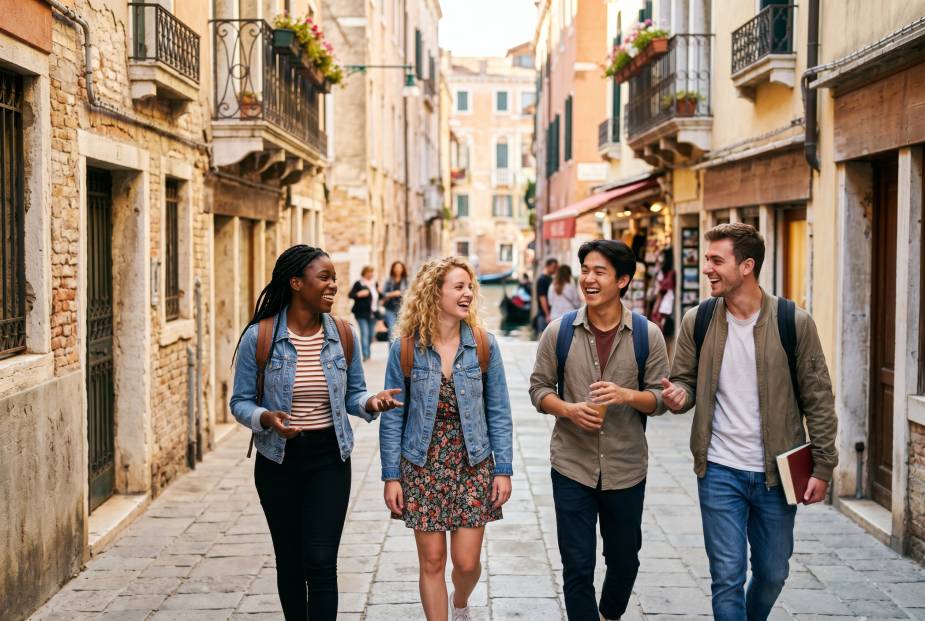
The advantages here are many, and they carry real weight. Unlike England or America, where the bills can run past $50,000, Italian universities are among the most affordable options in Europe. The pass mark for many subjects is often low — you simply need to prove your command of the language. If you are after a programme taught in English, that is realistic too. And the standard of Italian teaching in architecture, art, design, music and history is not merely high — it is the benchmark, recognised the world over. A pleasant bonus: students get the same discounts on transport and at museums as Italians do.
The drawbacks cannot be ignored either. Italy is the undisputed world champion of bureaucracy. The quest to obtain an Italian residence permit (permesso di soggiorno) can drag on for 4–12 months, and the application must be submitted within 8 working days of arriving in Italy. The red tape goes hand in hand with the unhurried pace of life, so obtaining even a simple certificate can take forever.
Finding affordable accommodation in big cities such as Milan or Rome is a real challenge. On top of that, students who have come from Kyrgyzstan often complain about the conservative academic system, where exams expect you to recite lectures word for word.
Which programmes are in demand
The range is wide, from camps for schoolchildren to top-level MBAs.
Summer camps and language courses are a gentle way into Italian culture. The University of Turin, for example, runs specialised summer schools for international students with language courses and lectures on culture, and there are private schools such as Global Swiss Academy in Milan for teenagers.
Secondary education at boarding schools is a good option for those who want an international environment. A year at a private boarding school costs, on average, 35,000 to 40,000 euros, depending on the school and the programme.
Bachelor’s and Master’s degrees are the main focus. The price depends on the prestige of the university and the family’s means — the ISEE assessment.
Public universities: fees range from roughly 900 to 4,000 euros a year, depending on the university and the programme; the lowest amounts may be smaller still.
Private universities: fees are noticeably higher, from 6,000 to 20,000 euros a year (at some, such as Luiss Guido Carli, the fee may be 13,000–15,000 euros).
Preparatory courses: dedicated year-long courses for international students cost around 1,300 euros.
MBA. Italian business schools are very highly rated. SDA Bocconi in Milan was named the best business school in Europe by Bloomberg 2025-2026. Programme fees run from €16,000 to €18,000 a year.
Student life and accommodation
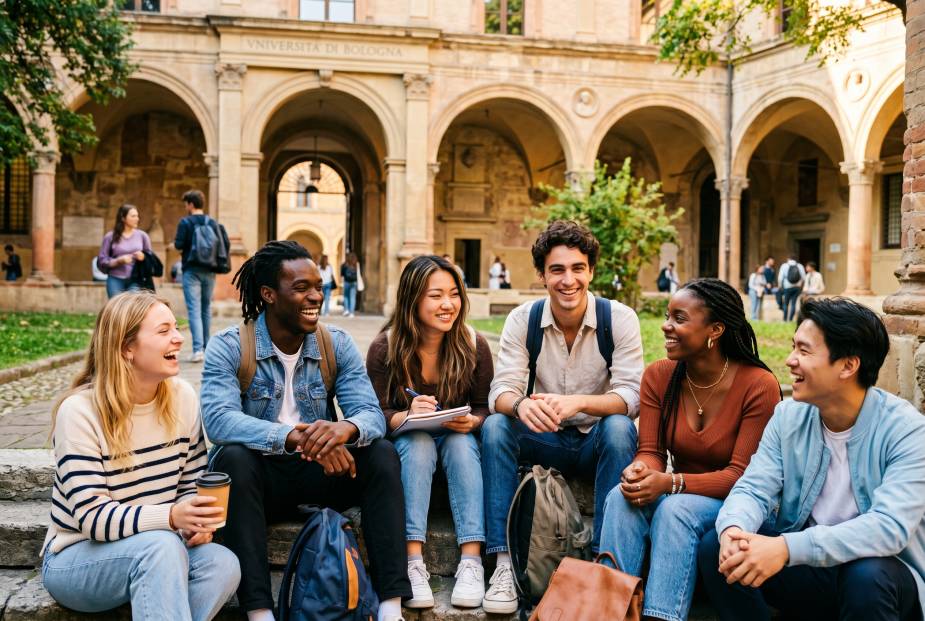
The biggest headache is finding somewhere to live. The 2025 picture is difficult: more than 42% of students who rent spend an exorbitant share of their budget on accommodation.
Milan and Rome: a room costs from 500 to 700 euros.
Turin and Bologna: a little more affordable, from 350 euros.
Trieste: the kindest prices of all — you can find a room for 300–400 euros.
A meal in a student canteen costs 5 to 12 euros. Cook for yourself and seek out budget trattorias, and you can comfortably keep your total monthly budget within 700–900 euros.
Transport: discounted travel passes are available to students. Many Italians talk animatedly with their hands — a national trait you will need to pick up to avoid the odd awkward moment. And mind the coffee rituals: a cappuccino after lunch is simply not done here — it is taboo.
Unique features: why Italy in particular?
The country runs a distinctive system of regional scholarships (DSU) and state MAECI grants. This is no myth but a genuine chance to cover the full cost of accommodation and meals, and even to receive a small stipend for pocket money.
A huge plus is the thousands of hours of UNESCO cultural heritage all around you, free or for a pittance. The third advantage: the prestigious engineering schools (the Polytechnics of Milan and Turin) and strong science faculties in robotics and pharmaceutics.
What matters for citizens of Kyrgyzstan
The Italian Embassy in Bishkek is actively building educational cooperation. The official representative offices can always advise you on the documents you need — do not overlook this.
The main opportunity is the Invest Your Talent in Italy (IYT) scholarship, which provides grants for Master’s programmes. Applications are made online, usually until spring (in 2026, for instance, the deadline was 11 May); check the exact dates each year. Then there are the state MAECI scholarships from the Italian government.
One practical tip: if your income is low, be sure to request an ISEE certificate. Tuition costs are assessed directly against your family’s income, so the lower the ISEE, the less you pay for university.
Conclusion
Italy is a country where you can gain a quality European education at a moderate price and live amid an atmosphere of historic grandeur and beauty. You will have to come to terms with the bureaucratic chaos, but the generosity of the scholarships, the low cost of public education and the spirit of freedom more than make up for it.
If you still have questions about choosing a university, registering on Universitaly or finding an IYT scholarship, get in touch with our specialists. We will help you plan an admission strategy so that the residence permit (permesso di soggiorno) does not become a nightmare, and your studies in Italy bring you nothing but benefit and pleasure.