
Medical Insurance and Certificates for Your Visa
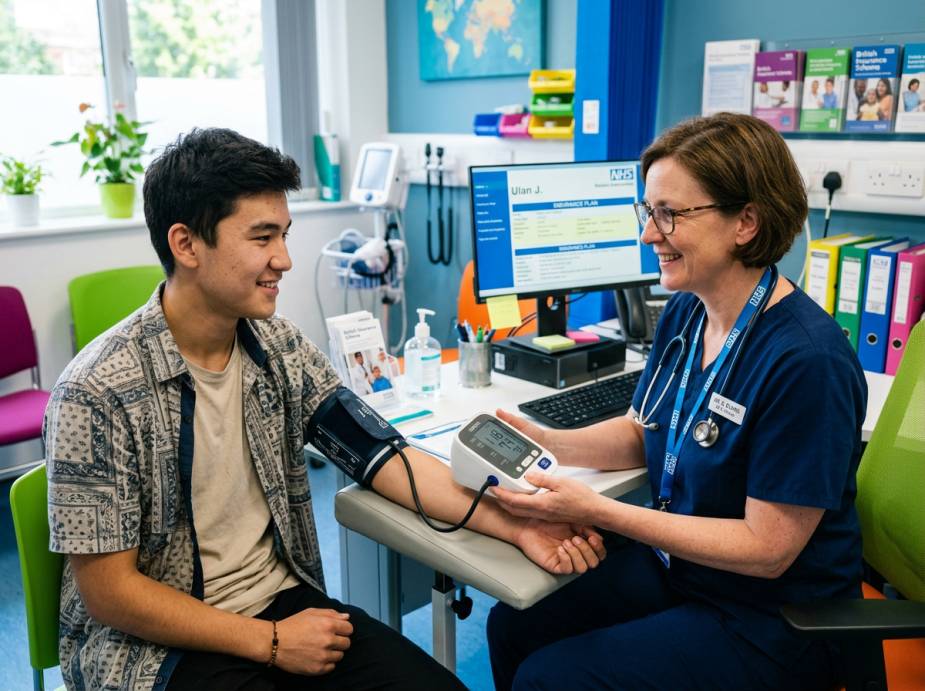
The familiar clinic back home is no longer around the corner. If something happens to you, local doctors will treat you — and given how their payment systems work, without insurance a visit to a GP can cost as much as an aeroplane wing. That's why medical insurance always comes down to money: both your own savings and the funds the host country isn't willing to spend on you.
Visa requirements and health certificates
The golden rule: read the requirements of the specific embassy. In one country your chronic conditions won't trouble anyone; in another you won't even be let in for an interview without a certificate from a particular doctor.The standard scenario: most often you'll be asked to complete a «Certificate of Health» or to produce a vaccination record. In Bishkek you can obtain it at the Republican Centre for Immunoprophylaxis or at private clinics licensed to carry out medical examinations for travellers.
It all depends on the requirements. Sometimes an ordinary GP will do; sometimes only HIV tests and a chest X-ray are needed; and sometimes the embassy insists on an examination by a «panel physician» from its official registry. They won't send you for a colonoscopy out of the blue, but they may refer you for a blood test and a lung X-ray.
Important: Certificates have a way of "going off". They are usually valid for 3 to 6 months, so don't get them done a year before you leave.
Country-specific features
Each country in 2026 approaches your health with a different degree of caution.
- USA. There is no single state insurance scheme at all. Each university sets its own rules. Some accept private insurance from a local provider, while others make you buy their branded policy on enrolment day.
- United Kingdom. The main headache is the TB Test. You must take it before you apply for a student visa, and the certificate is valid for only six months. It can only be done through an officially approved UKVI provider. The catch for Kyrgyzstan: as of May 2026 there is no official UKVI TB-test provider in Bishkek. So to study in the United Kingdom you'll most likely have to take the test on arrival or in a third country (Turkey or Kazakhstan, for example). On top of that, when you apply for the visa you pay the Immigration Health Surcharge (IHS). This isn't a charge for medical care but an immigration fee that is mandatory for your application to be processed. For students it comes to £470 per year, plus £470 for every six months if the visa period includes extra half-years (July–January, for example). Without paying the IHS, your application will not be considered. Access to the NHS itself is governed by separate rules: after arrival you register with a local clinic (GP Surgery) where you live and receive an NHS number — that's a separate procedure again.
- Australia. Here a federal law applies: you must buy OSHC (Overseas Student Health Cover) before you even submit your documents. It's a government programme, and you can only buy it from a few companies (Bupa, Medibank, AHM). Without a policy number your case won't even be looked at.
- Schengen countries (Germany, France, Poland). The golden rule: minimum cover of 30,000 euros. In Germany they won't even open a blocked account for you without official insurance. In France insurance is compulsory at first, but after a couple of months you have to enrol in the local Ameli system.
- Asia (Korea, Japan, Malaysia, Turkey). In Korea you may be asked, right at the airport, for a certificate confirming you are free of tuberculosis or HIV, from a Korean doctor or an accredited laboratory. In Japan you must enrol in National Health Insurance when you obtain your residence permit (if you'll live there longer than 3 months), otherwise you'll pay 100% of treatment costs out of your own pocket. In Turkey, GSS insurance is also compulsory to obtain and renew a residence permit; in 2026 the annual GSS contribution is roughly 16,000 Turkish lira (about 420 dollars).
- UAE (Dubai). A foreign student receives a visa only once they have basic medical insurance from a local company. Since 1 January 2025, insurance for Dubai residents has been strictly tied to the visa and immigration number.
The main things to remember
- Without insurance you'll either be turned away or go broke. Don't try to save money with a minimum-cover policy for 50 dollars — it won't cover a real operation.
- Read what is excluded from cover. Chronic conditions (asthma, diabetes) usually aren't covered unless you've proven they are stable. Dental care is also almost always at your own expense.
- Buy your insurance before applying for the visa. Without a policy number (or proof that you've bought OSHC) your visa may simply be refused.
- Where do you get treatment in an emergency? Always call your insurer on the number on the policy — this is called «assistance». They'll tell you which hospital to go to and, if needed, arrange an interpreter. Don't try to get treated at just any private clinic you come across, as they may later refuse to pay.
For Kyrgyz nationals: bear in mind the lack of a US panel physician and a UKVI TB-test provider in Bishkek. This isn't a disaster, but it does call for extra planning. We'll advise you on the best way to organise a medical examination for a specific country.